Wednesday, 31 January 2018

Smileband general news


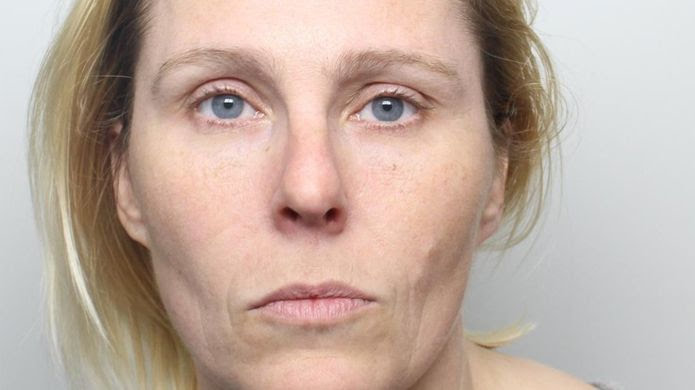
Michaela Sheldrake, 41, described herself as a 'monster' after a court heard she had amassed indecent images and videos and had taken 356 indecent photographs of a girl under 16 - sending some of the pictures to a man.  
Speaking after the case, a relative said the victim had been 'left serving a life sentence' and Sheldrake should be 'behind bars for the rest of her life'.
She was jailed after admitting nine offences at an earlier hearing. 
They included two charges of taking indecent photographs of a child - three of the images were classed as category B and 353 were category C.
Sheldrake also admitted two charges of making indecent photographs of a young boy in connection with two images classified in category A - the most serious category - and five in category B. Sheldrake admitted one charge of inciting a girl aged under 16 to engage in sexual activity and one charge of engaging in sexual activity in the presence of a girl under 16.
Sheldrake, of Beeston, Leeds, West Yorkshire, admitted possessing 2,578 indecent images and 110 movies of children on a mobile phone. 
She also admitted distributing indecent photographs of a child and attempting to pervert the course of justice by encouraging a child to provide false information to police.
Catherine Silverton, mitigating at Leeds Crown Court, said Sheldrake had no previous convictions and was ashamed of her offending.
She said: 'Nobody hates her as much as herself. 'She described herself as a monster.'
Miss Silverton said the case has been going on for almost three years. 
Jailing Sheldrake, judge Sally Cahill, QC, said: 'It is said on your behalf that you have shown remorse. 'I have to say that, having read reports and reviewed the evidence, there is no real evidence of that in relation to your victims. 
'You have realised the consequences of your behaviour and the consequences are severe. 'In my view you have not shown any real remorse.'
Det Insp Marc Bowes, of West Yorkshire Police, described the offences as 'absolutely appalling' and said Sheldrake's offending was 'significant and sustained'. <!-- Global site tag (gtag.js) - Google Analytics -->
<script>
  window.dataLayer = window.dataLayer || [];
  function gtag(){dataLayer.push(arguments);}
  gtag('js', new Date());

  gtag('config', 'UA-109237959-1');
</script>

Smileband health topics


A three-month-old girl is desperately waiting for surgery to remove a lump on her neck that has grown bigger than her head. Zareena Mangro, from Pakistan, was born with occipital encephalocele – a rare condition in which brain fluid bulges out of the skull bone. 
The baby was born with a mass the size of a golf ball but within three months it grew rapidly and she is now not able to turn her head.
Her parents, father Wajid Mangro, 37, and mother Nasreen Mangro, 24, are anxious to get a date for the operation to change their daughter's life.
They said Zareena, their third child, was born through a normal delivery despite the ball-like mass.
Mrs Mangro, from Loralai in the Balochistan province, said: 'She was only two weeks old when we took her to hospital. Her lump was very small at that time. 'Doctors gave her medicines but her condition didn't improve rather went from bad to worse. Within three months, the lump has grown bigger than her head.
'We are worried about her condition as she is not able to turn her head. Also, she can't sleep on the back of her head.'
'Her life will change forever' 
Mr Mangro, who works as a plumber in a construction company in United Arab Emirates took one month leave from work and flew back to Pakistan in order to get her daughter operated in a bigger hospital.
He and his wife travelled over 500 miles in a bus from Loralai to Karachi and had Zareena admitted in Jinnah Post Graduate Medical Centre. 
The father said: 'It's our second visit to Jinnah Hospital but yet we have not received any date for surgery yet. Doctors are giving her medicines and antibiotics through syringe. <!-- Global site tag (gtag.js) - Google Analytics -->
<script>
  window.dataLayer = window.dataLayer || [];
  function gtag(){dataLayer.push(arguments);}
  gtag('js', new Date());

  gtag('config', 'UA-109237959-1');
</script>

Tuesday, 30 January 2018

Smileband health topics


A 23-year-old mother died after taking a 'high level' of the diarrhoea drug Imodium which caused her to suffer a heart attack, an inquest found. Brooklyn-Marie Barker, from Croxteth, Liverpool, was taken to the Royal Liverpool University Hospital after having a cardiac arrest in October but died five days later.
The pathologist Brian Rodgers said the combination of the drug Imodium and her epilepsy medication Pregabalin may have caused the cardiac arrest, the Liverpool Echo reported. 
Mr Rodgers said: 'There was a very high level of Loperamide more commonly known as Imodium.
'Why she was taking it I don't know, but Imodium is a morphine type drug and has similar effects.
'It is becoming an increasingly misused drug - and I make that as a general comment. Some individuals who have been abusing heroin will take Imodium to get off heroin.'
After being taken to hospital she caught pneumonia and a bacterial infection which ultimately led to her death.  
Liverpool Coroner's Court heard that the day before the cardiac arrest she had suffered two non-epileptic seizures, after which her boyfriend put her into the recovery position before going to bed.
The next morning he found her 'gargling, grey and unconscious' and he called 999 after realising she was not breathing. Ms Barker's mother, Diane, accused her daughter's boyfriend - who had a 'fairly chaotic' relationship with her after 'numerous allegations of assault' - of supplying her with heroin.
No such drugs were found in her system, but Mr Rodgers said there was scarring around her groin area which 'could have' come from drug abuse. 
Coroner Andre Rebello ruled that the death was accidental, and said that Ms Barker died from hypoxic brain injury and bronchopneumonia, caused by a cardiac arrest, with Loperamide (Imodium) and Pregabalin noted as contributory factors. 
He added: 'This was the most tragic accident. It is much more difficult when a child or grandchild dies before us - it is not how it should be.
'Please don’t allow these feelings regarding her relationship to destroy your memory of Brooklyn’s life.' <!-- Global site tag (gtag.js) - Google Analytics -->
<script>
  window.dataLayer = window.dataLayer || [];
  function gtag(){dataLayer.push(arguments);}
  gtag('js', new Date());

  gtag('config', 'UA-109237959-1');
</script>

Smileband general news


Thousands of British cancer patients are dying early because NHS survival rates are trailing behind the rest of the world, a report has found. The largest study of cancer survival ever conducted puts the UK towards the bottom of global league tables for several common cancers.
Health charities last night called for urgent action to close the 'appalling' and 'unacceptable' gulf with other nations, blaming slow diagnosis and poor treatment. While British cancer survival has improved slightly over the past 20 years, the country is being left behind by huge advances in other countries.
The study, published in The Lancet medical journal, analysed the records of 37.5million patients with 18 of the most common cancers, comparing survival rates for 71 countries.
The UK falls in the bottom half of the league table for seven cancers and only comes in the top ten for two. For years campaigners have warned that British survival rates are way behind those in Europe and the US, and studies suggest 10,000 deaths could be prevented each year if the UK merely hit the European average.
But the analysis shows Britain is also left trailing by developing nations such as Jordan, Puerto Rico, Algeria and Ecuador.
The data, from 2010 to 2014, shows that only 6.8 per cent of British pancreatic cancer patients survive for five years after diagnosis, putting the UK 47th out of the 56 countries that had full data for that cancer.
The pancreatic cancer survival rate in the US is nearly twice as high, at 11.5 per cent. But the UK is also surpassed by Latvia, South Africa and Argentina. For stomach cancer the UK comes 46th out of 60 countries, with only 20.7 per cent surviving five years, worse than Romania, Turkey and Malaysia. <!-- Global site tag (gtag.js) - Google Analytics -->
<script>
  window.dataLayer = window.dataLayer || [];
  function gtag(){dataLayer.push(arguments);}
  gtag('js', new Date());

  gtag('config', 'UA-109237959-1');
</script>

Smileband general news


Five men have been arrested after half a tonne of cocaine worth more than £50 million was discovered in a private jet. Border Force officers found around 500kg of the Class A drug after searching a twin-engined aircraft that flew into the UK from Bogota in Colombia yesterday.
Two Britons, two Spaniards and an Italian were arrested on suspicion of importing Class A drugs after the jet landed at Farnborough Airport in Hampshire. The discovery is believed to have been one of the largest recent seizures of its kind. The Border Force said that the drug was hidden in 15 suitcases found on board.
The plane belongs to an Austrian company called Tyrolean Jet Services based in Innsbruck, according to The Sun. 
Border Force Deputy Chief Operating Officer Mike Stepney said: 'After meeting the flight and questioning those on board, officers became suspicious and searched the aircraft and their luggage. 
'When opened, each case was found to contain between 34 to 37 tape wrapped packages weighing approximately one kilo each.
'One of these was pierced and a white powder exposed which tested positive for cocaine. Three properties in Bournemouth, Dorset, were also searched by the National Crime Agency (NCA) as part of the investigation, and computers and phones taken away for examination.
NCA operations manager Siobhan Micklethwaite said: 'This is a major seizure of cocaine, one of the largest flown into the UK by plane in many years, and this seizure by Border Force represents a major blow to organised crime.
'We estimate that once cut and sold on the streets in the UK it would have had a potential value in excess of £50 million.'
The aircraft crew were questioned before being released without charge. <!-- Global site tag (gtag.js) - Google Analytics -->
<script>
  window.dataLayer = window.dataLayer || [];
  function gtag(){dataLayer.push(arguments);}
  gtag('js', new Date());

  gtag('config', 'UA-109237959-1');
</script>

Smileband health topics


Health Risks of Being Overweight

Overweight and obesity may increase the risk of many health problems, including diabetes, heart disease, and certain cancers. If you are pregnant, excess weight may lead to short- and long-term health problems for you and your child.
This fact sheet tells you more about the links between excess weight and many health conditions. It also explains how reaching and maintaining a normal weight may help you and your loved ones stay healthier as you grow older.

What kinds of health problems are linked to overweight and obesity?

Excess weight may increase the risk for many health problems, including
  • type 2 diabetes
  • high blood pressure
  • heart disease and strokes
  • certain types of cancer
  • sleep apnea
  • osteoarthritis
  • fatty liver disease
  • kidney disease
  • pregnancy problems, such as high blood sugar during pregnancy, high blood pressure, and increased risk for cesarean delivery (C-section)

How can I tell if I weigh too much?

Gaining a few pounds during the year may not seem like a big deal. But these pounds can add up over time. How can you tell if your weight could increase your chances of developing health problems? Knowing two numbers may help you understand your risk: your body mass index (BMI) score and your waist size in inches.

Body Mass Index

The BMI is one way to tell whether you are at a normal weight, are overweight, or have obesity. It measures your weight in relation to your height and provides a score to help place you in a category:
  • normal weight: BMI of 18.5 to 24.9
  • overweight: BMI of 25 to 29.9
  • obesity: BMI of 30 or higher
  • <!-- Global site tag (gtag.js) - Google Analytics -->
    <script>
      window.dataLayer = window.dataLayer || [];
      function gtag(){dataLayer.push(arguments);}
      gtag('js', new Date());

      gtag('config', 'UA-109237959-1');
    </script>

Smileband general news


Bill Gates has revealed that his father suffers from Alzheimer's disease. The billionaire tech-mogul, 62, described how the diagnosis of his 92-year-old lawyer father, Bill Gates Sr, inspired him to fund research for a cure for the neurodegenertative disease.
In November, the Microsoft co-founder invested $100 million of his $94 billion fortune to innovative and unconventional research with the hopes that new drugs will be developed within the next 10 to 15 years.
Now he has disclosed that his Washington-born dad, who has had a hand in major business deals including Howard Schultz's purchase of Starbucks, was his motivation for doing so. 
This morning, Gates told TODAY that he is optimistic that with the right resources a cure and preventative drugs will be discovered to combat the disease that 5.5 million Americans suffer from. In a sit-down interview with NBC's Maria Shriver, whose father died of the disease, Gates said: 'I have a father who's affected deeply by it. Only by solving problems like this can we take these medical costs and the human tragedy and really get those under control.'
Gates added that his father's diagnosis lead him to worry about his own brain staying 'intact as long as possible'. 
Of his $100 million donation, $50 million will go to the Dementia Discovery Fund, an organization that brings together industry and government to fund innovative dementia research.
The remaining $50 million will go toward a national patient registry to speed up recruitment for clinical trials and an international research database that will help scientists share data and collaborate with one another.
Both donations are personal investments, separate from Gates' philanthropic Bill and Melinda Gates Foundation. 
'More and more people are getting Alzheimer's, and it's tragic,' he said. 
It is unclear how long his father, also a philanthropist, has had the disease.
Americans spent $259 billion in 2017 caring for loved ones with Alzheimer's and other dementias.
Dementia, of which Alzheimer's is the most common form, affects close to 50 million people worldwide and is expected to affect more than 131 million by 2050, according to Alzheimer's Disease International.
Despite decades of scientific research, there is no treatment that can slow the progression of the disease. The philanthropist, whose usual focus is on infectious diseases in poorer countries, eluded to his father's diagnosis when he announced his donation in November.  
'I know how awful it is to watch people you love struggle as the disease robs them of their mental capacity... It feels a lot like you're experiencing a gradual death of the person that you knew,' he said in a blog post about the dementia investments.
He added: 'Some of the men in my family have suffered from Alzheimer's, but I wouldn't say that's the sole reason [for this investment].'  
Through talking to experts in the field over the past year, Gates said he had identified five areas of need: understanding better how Alzheimer's unfolds, detecting and diagnosing it earlier, pursuing multiple approaches to trying to halt the disease, making it easier for people to take part in clinical trials of potential new medicines and using data better.
'My background at Microsoft and my foundation background say to me that a data-driven contribution might be an area where I can help add some value,' he said.
This would make it easier for researchers to look for patterns and identify new pathways for treatment, Gates added.
Gates said: 'I really believe that if we orchestrate the right resources, it's solvable.' <!-- Global site tag (gtag.js) - Google Analytics -->
<script>
  window.dataLayer = window.dataLayer || [];
  function gtag(){dataLayer.push(arguments);}
  gtag('js', new Date());

  gtag('config', 'UA-109237959-1');
</script>

Smileband News

Dear 222 news viewers, sponsored by smileband,  British Tourists Injured in Canary Islands Bus Crash A coach carrying British holidaymakers ...